By Nicola Spurling and project partners


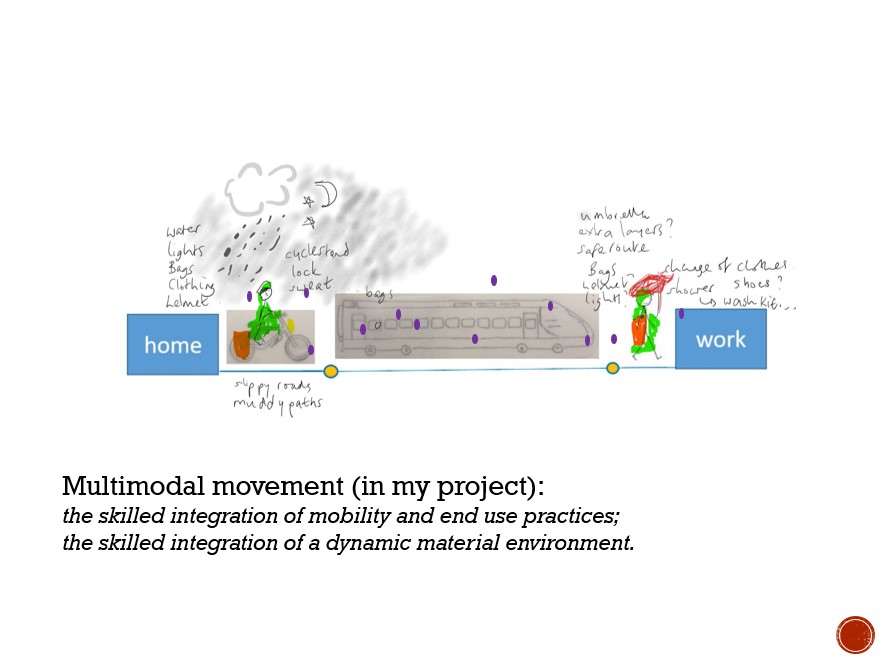
In Summer 2020 I was shortlisted and interviewed for a major £1 million grant application as part of the UKRI Future Leaders’ Fellowship Scheme. The exciting proposed project, ‘Making Multi-Modal Futures’, reframed provider-side definitions and designs of ‘integrated transport’, and instead considered how car-free multimodal travel within trips, and across days, weeks and seasons, would be designed from the bottom-up. I posed the question, If this redefinition of ‘integrated transport’ was taken seriously which stakeholders would be involved?; and, how would future travel vary in cities around the world (Manchester, UK; Bogota, Colombia; Bangalore, India)?.
The bid involved interdisciplinary and cross-sector partners that I had built through collaborative working and network building over the preceding four years – sociologists, anthropologists, transport planners, urban designers, future technologists, fashion designers, cycling specialists and mobility justice activists. Namely these individuals and organisations were: researcher/ anthropologist Cosmin Popan, Transport for Greater Manchester, IBI Group International (Toronto, Canada), Microsoft Research Lab Bangalore (India), despacio.org Bogotá (Colombia), RMIT Melbourne, Aalborg University Copenhagen (Denmark), Monash University (Australia), University of Amsterdam (The Netherlands), The University of Queensland (Australia), the National Commission on Travel Demand. It was really disappointing not to be funded, but I’m grateful to all the project partners for their time and investment in this future-shaping project idea. Some of the images and ideas from the project proposal are shared in the slideshow above.

 Nicola Spurling