By Nicola Spurling and Louise Mullagh (Imagination Lancaster)
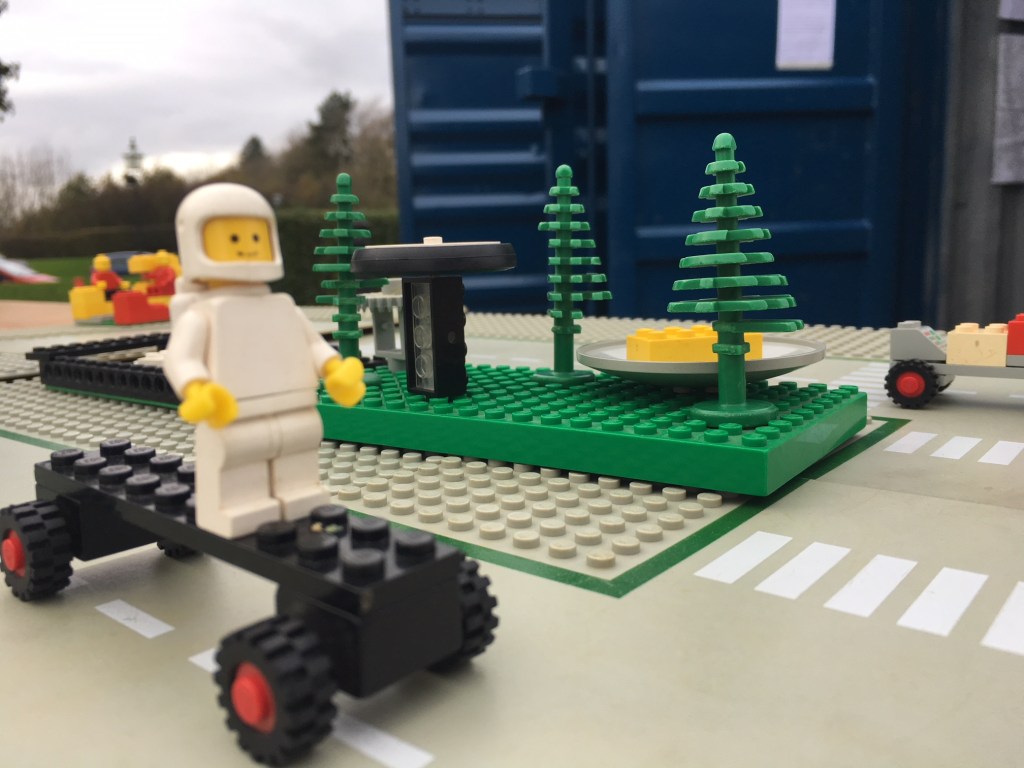

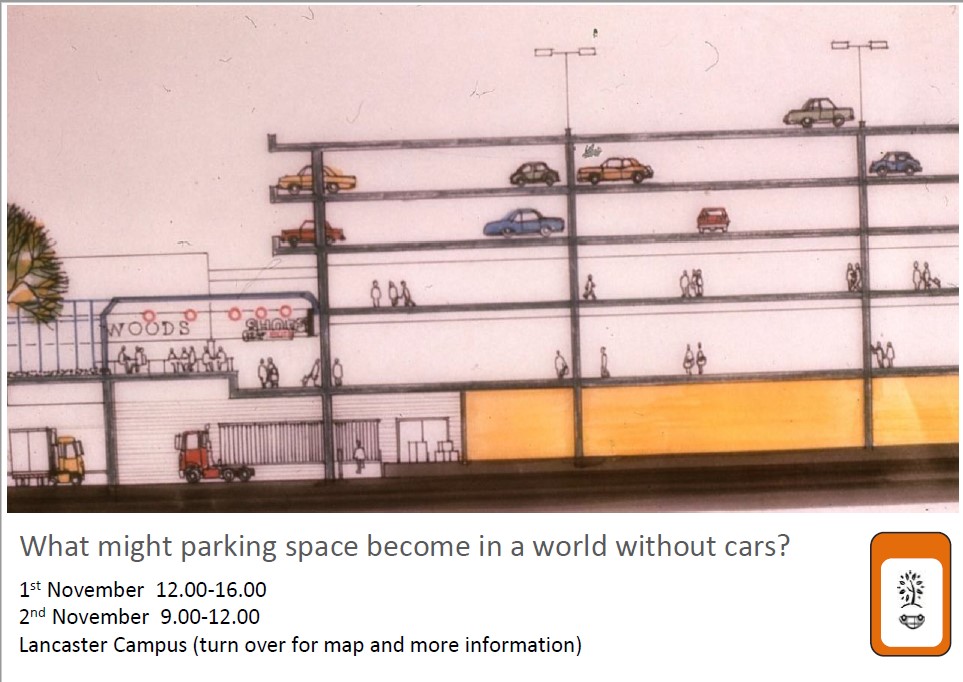

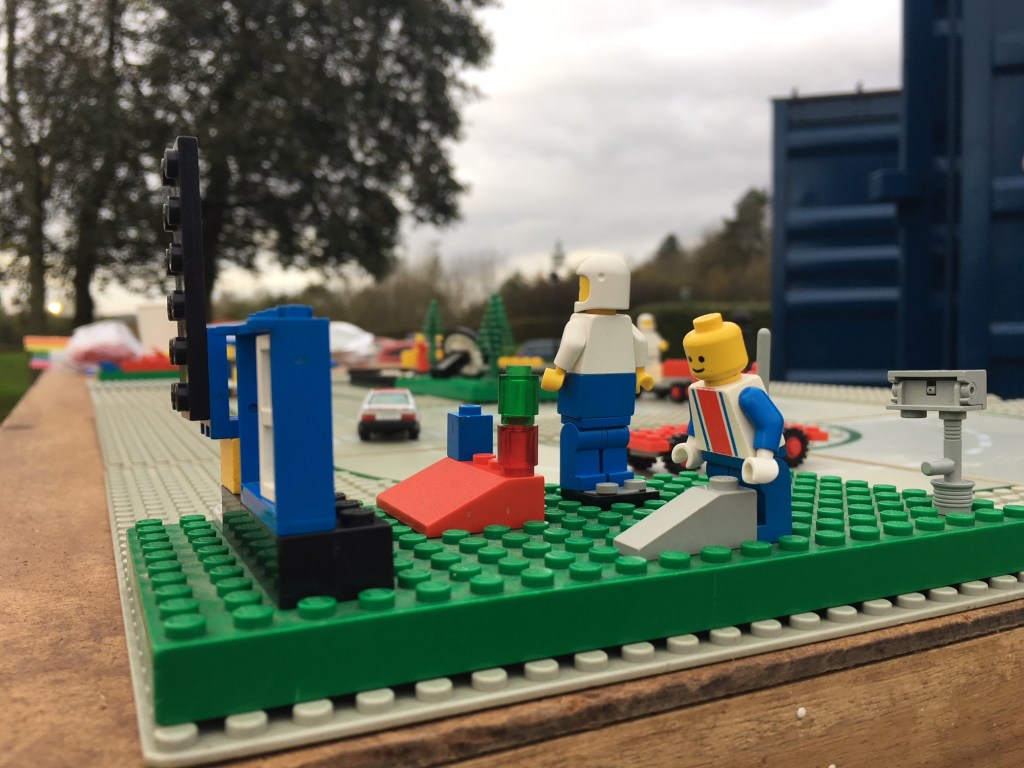
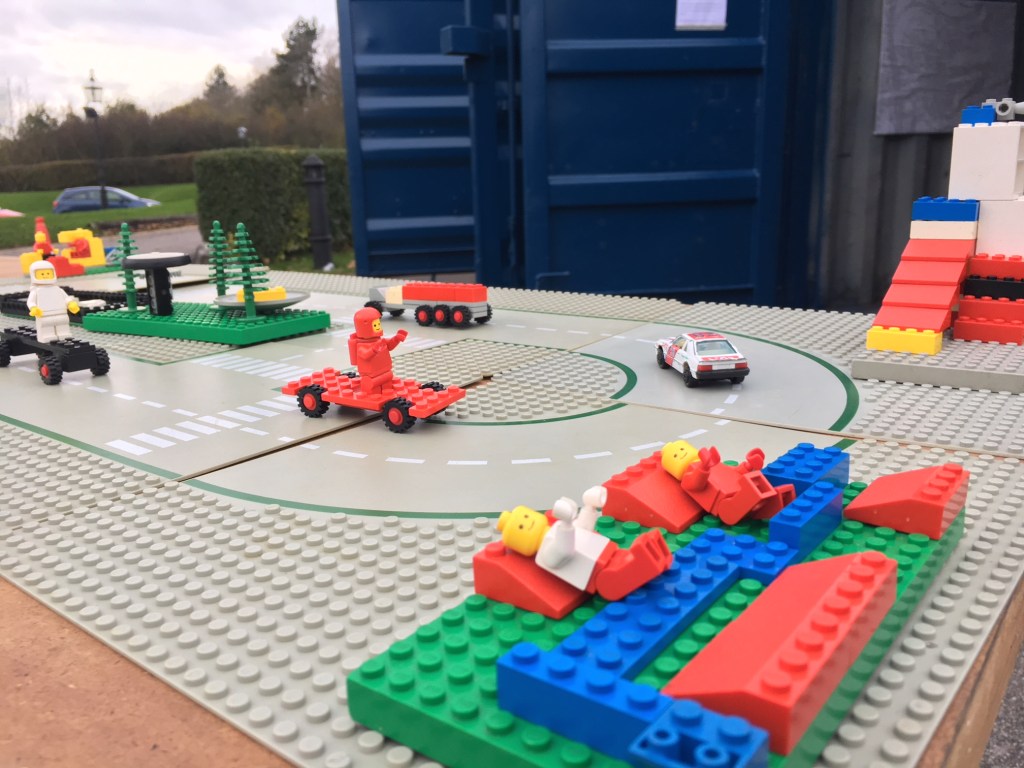

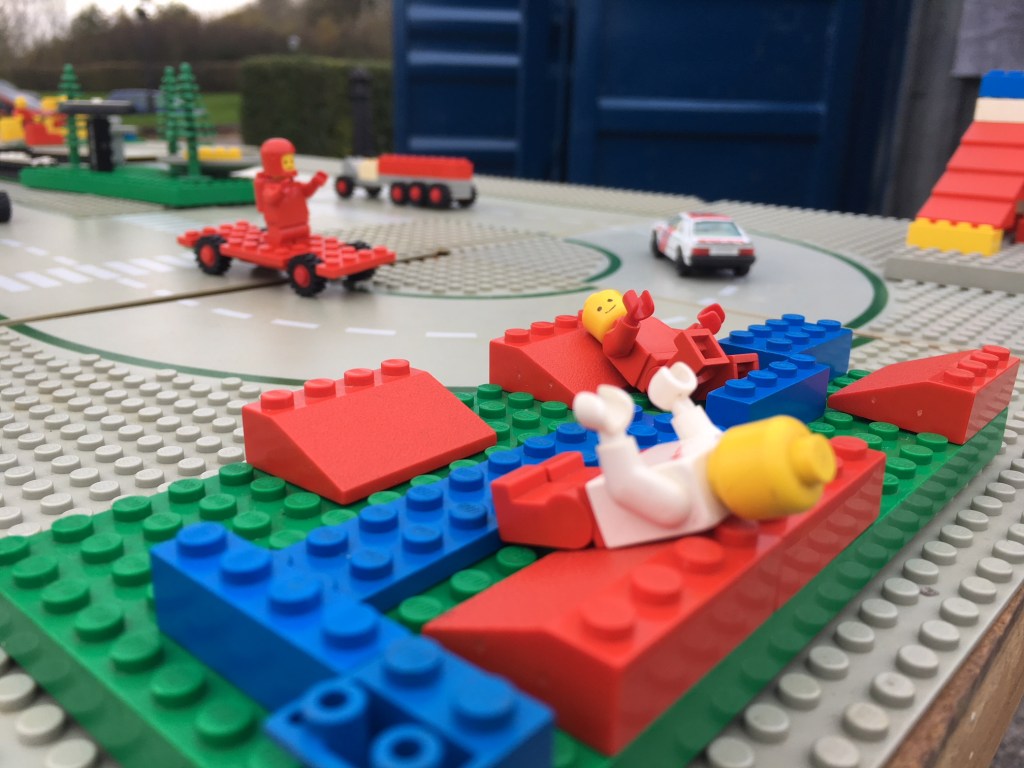
In 2017 I was funded by the Mobile Utopia Experiment to stage a 2-day intervention with Louise Mullagh (Imagination Lancaster) which I titled ‘Parking in Utopia’.
I occupied two parking spaces on Lancaster campus. In one I installed an exhibition of historic maps gathered through archival work which explored past land use of Lancaster car parks. In the other I installed a park(let) in which passers-by were invited to play with lego to imagine ‘What might parking space become in a world without cars?’ and discuss ‘What else would need to change to make this possible?’.
Parking lots, multi-storeys, garages, driveways and underground: the infrastructure for ‘dormant vehicles’ on our Campus and in our City is extensive. Yet, it is anticipated that car ownership and use will change in the future because of changed patterns of shopping and working, increased walking and cycling, emerging technologies such as Electric and Automated Vehicles and a shift to mobility being consumed as a service (e.g. Uber, car share schemes). In these futures, car parks would become the archaeological remains of an automobile age, whilst new alternatives to parking might be needed – such as spaces for ‘waiting’, ‘electrical charging’ and ‘interchanging’.
The ideas generated by the event partly inspired my discussion in a journal paper in a special issue of Land Use Policy.

 Nicola Spurling